





The Complete Guide to Coffee Beans
☕ Definitive Guide · 2026
The Complete Guide to Coffee Beans
Everything you need to know about coffee varieties, origins, processing methods, and what makes specialty-grade beans worth the investment — written by people who actually grow coffee.
As Featured In




Contents
- The Four Species of Coffee
- Arabica vs Robusta: The Real Difference
- Popular Arabica Varieties (From the Farm)
- Coffee Origins: Why Geography Matters
- Central America: Our Home
- Processing Methods Explained
- Coffee Grading: What "Specialty" Really Means
- Roast Levels & Flavor
- Direct Trade vs Fair Trade vs Conventional
- How to Choose the Right Coffee Beans
Most coffee guides are written by marketers. This one is written by people who actually grow, harvest, process, and roast the beans. At Guadalupe Roastery, we grow coffee at Guadalupe Farms in Central America and buy directly from Catholic coffee-farming families in Latin America — and we've seen every step of the journey, from cherry to cup. That perspective changes everything.
Whether you're a casual drinker curious about what makes one bag different from another, or a specialty coffee enthusiast looking for deeper knowledge, this guide gives you the complete picture — including the parts most coffee companies skip.
The Four Species of Coffee
There are over 120 species of coffee, but only four are commercially cultivated. Understanding the species is the foundation of understanding coffee.
Arabica (Coffea arabica)
60-70% of world production · Ethiopia origin · 900-2,000m altitude
Arabica is the gold standard of coffee. It grows at higher altitudes (900-2,000m), develops slowly, and produces complex, nuanced flavors. All specialty coffee is Arabica. Our beans from the Central American highlands grow at 1,200-1,500m — the sweet spot for developing rich chocolate and citrus notes. Arabica is more delicate and susceptible to disease, which makes it more expensive to grow but infinitely more rewarding to drink.
Robusta (Coffea canephora)
30-40% of world production · Central Africa origin · 0-800m altitude
Robusta contains nearly twice the caffeine of Arabica and has a harsher, more bitter flavor profile. It's cheaper to produce (disease-resistant, lower altitude) and is commonly used in instant coffee, espresso blends, and commercial-grade products. If your morning coffee tastes "strong" but flat, it likely contains Robusta. That said, high-quality Robusta from Vietnam or Indonesia can add body and crema to espresso blends.
Liberica (Coffea liberica)
~2% of world production · West Africa origin · Philippines, Malaysia
Liberica is the rarest commercially available coffee. Its beans are asymmetrical and much larger than Arabica. The flavor is divisive — smoky, floral, and fruity with a woody finish. It's most popular in the Philippines (known as "Barako") and Malaysia. If you ever encounter Liberica, try it — but don't expect it to taste like any coffee you've had before.
Excelsa (Coffea excelsa)
~7% of world production · Sometimes classified under Liberica · Southeast Asia
Previously classified as a separate species, Excelsa is now considered a variety of Liberica — though it tastes quite different. It has a tart, fruity character and lighter body. Excelsa is often used in blends to add complexity and depth, particularly in Southeast Asian coffees.
Arabica vs Robusta: The Real Difference
This is the most important distinction in coffee. Here's a head-to-head comparison:
| Factor | Arabica | Robusta |
|---|---|---|
| Flavor | Complex, sweet, fruity, acidic | Bitter, earthy, nutty |
| Caffeine | 1.2-1.5% | 2.2-2.7% (nearly double) |
| Sugar Content | 6-9% (sweeter) | 3-7% |
| Growing Altitude | 900-2,000m | 0-800m |
| Price | Higher (specialty: $3-8/lb green) | Lower ($1-3/lb green) |
| Disease Resistance | Low (needs more care) | High (hardy plant) |
| Used In | Specialty coffee, single origin | Instant, commercial espresso |
| Our Farms | 100% Arabica from Central America | We don't grow Robusta |
Why altitude matters: Higher altitude = cooler temperatures = slower cherry maturation = more complex sugars and acids developing in the bean. This is why our Central American beans (1,200-1,500m) have the rich, layered flavor profiles that low-altitude coffees simply can't match.
Popular Arabica Varieties
Within Arabica, there are dozens of cultivated varieties — each with distinct flavor characteristics. Here are the ones you'll encounter most often, including the ones you'll find in Central America's highlands:
Bourbon
Named after the island of Réunion (formerly Bourbon), this variety is known for its sweet, complex profile with notes of caramel, chocolate, and fruit. Bourbon is one of the foundational varieties of specialty coffee. It produces less yield than modern hybrids, but the cup quality is exceptional.
Caturra
A natural mutation of Bourbon discovered in Brazil. Caturra is a dwarf plant that produces bright, citrusy cups with good body. Caturra is widely planted across Central America's highlands — the volcanic soil and altitude give it a distinctive chocolate-citrus character that's unique to the region.
Typica
The original Arabica variety that most modern cultivars descend from. Typica produces clean, sweet coffees with low acidity. It's less productive than Caturra but is still prized for its elegant simplicity and heritage value.
Gesha / Geisha
The most celebrated (and expensive) variety in specialty coffee. Originally from Ethiopia's Gesha village, this variety exploded onto the scene at the 2004 Best of Panama auction. Flavor notes include jasmine, bergamot, and tropical fruit. Expect to pay $30-100+ per bag for genuine Gesha.
SL28 & SL34
Developed in Kenya in the 1930s at Scott Laboratories. These varieties are famous for their intense blackcurrant and citrus acidity — the signature "Kenyan flavor" that coffee enthusiasts love. Difficult to grow outside East Africa.
Pacamara
A cross between Pacas and Maragogipe, created in El Salvador. Pacamara produces large beans with complex flavors: floral, chocolate, and a distinctive creamy body. It's becoming increasingly popular in Central American specialty lots.
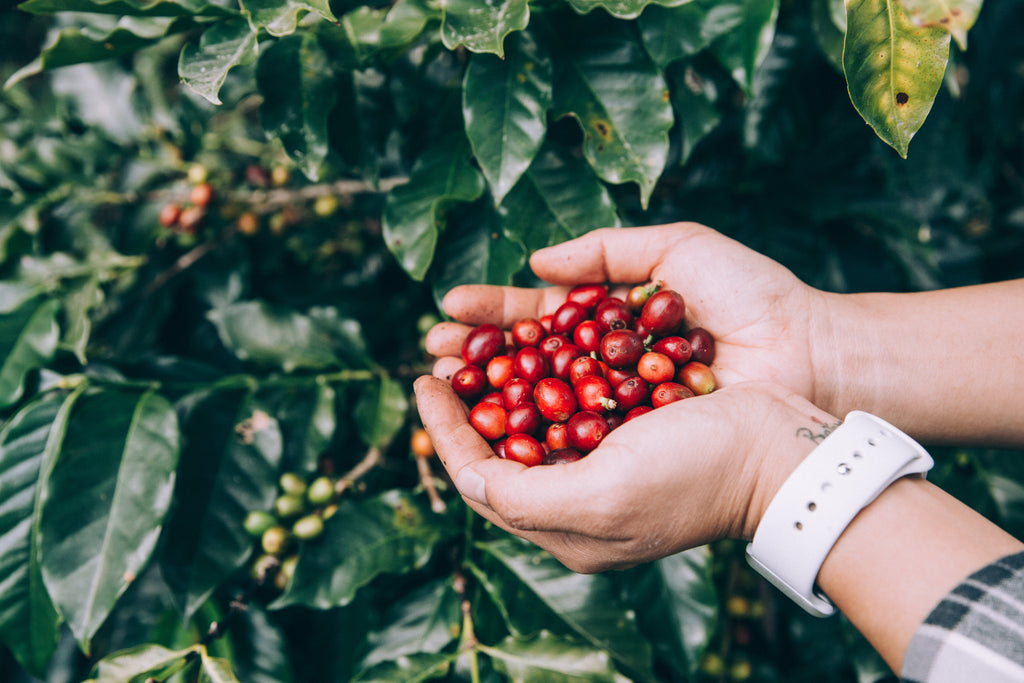
The variety is only half the story. The same Caturra bean tastes completely different grown at 800 meters vs 1,400 meters. Altitude, soil, and care from the farmer — that's what makes great coffee.Guadalupe Roastery — From the Farm
Coffee Origins: Why Geography Matters
Coffee grows in the "Bean Belt" — the tropical zone between the Tropics of Cancer and Capricorn. But within that belt, each region produces dramatically different flavors. Here's what defines the major origins:
Central America
Guatemala, Costa Rica, Honduras, El Salvador, Nicaragua, Panama. Central American coffees are prized for their balanced profiles — clean acidity, chocolate and nutty base notes, and medium body. The volcanic soil across the region adds mineral complexity. Central America (our home) is particularly known for its sweet, smooth medium roasts with notes of chocolate, vanilla, and citrus.
South America
Colombia, Brazil, Peru. Brazil is the world's largest producer — their coffees tend to be nutty, chocolatey, and low-acid. Perfect for espresso bases. Colombian coffee is perhaps the world's most famous single origin: balanced, bright, and caramel-sweet. Peruvian coffees are gaining recognition for their clean, delicate profiles.
East Africa
Ethiopia, Kenya, Rwanda, Burundi. The birthplace of coffee. Ethiopian coffees are the most diverse and often the most exciting: blueberry, jasmine, citrus, wine-like. Kenyan coffees have bold, blackcurrant acidity. If you want to experience coffee at its most expressive, start with East Africa.
Southeast Asia & Pacific
Indonesia (Sumatra, Java), Vietnam, Papua New Guinea. Asian coffees tend toward earthy, heavy-bodied, low-acid profiles. Sumatran coffees are famous for their full body and herbal, spicy notes. Vietnam produces mostly Robusta for the commercial market.
Central America: Our Home
This is the section no other coffee guide can write — because we're not describing Central America from a textbook. We're there.
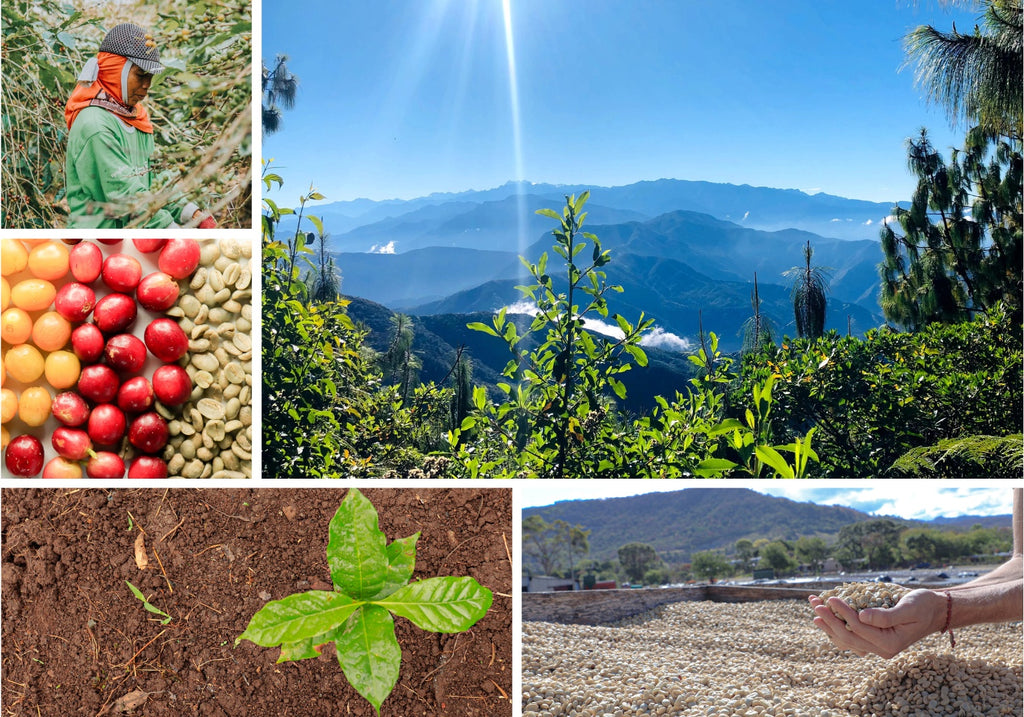
Central America's northern highlands sit at elevations between 1,000 and 1,500 meters. The combination of volcanic soil, tropical rainfall, and cool mountain air creates an ideal microclimate for growing Arabica coffee. The result is a naturally sweet cup with medium body, bright acidity, and flavor notes of chocolate, caramel, citrus, and vanilla.
Even other coffee brands acknowledge that Central America's highlands produce some of Central America's best beans. The difference is: they buy beans from the region through importers. We grow ours at Guadalupe Farms and buy directly from the Catholic farming families who grow them.
Why Our Central American Beans Are Different
Altitude: 1,200-1,500 meters — the sweet spot where cherries mature slowly and develop maximum sugar content.
Soil: Volcanic clay-loam with high mineral content. Rich in potassium and phosphorus, which contribute to balanced acidity and full body.
Varieties: 100% Arabica. Alongside the signature washed lot, our special lots include Parainema, Catuaí and Geisha — varieties that produce less yield but dramatically better cup quality.
Processing: Washed and sun-dried on raised beds. Sorting is done by hand — only specialty-grade beans make the final cut.
Human Investment: 100% of our margin goes back into Catholic Trade — reinvested in the farmers and the local communities where our coffee is grown — a Catholic economy in the spirit of Rerum Novarum. This creates a partnership that incentivizes quality at every step.
Taste Central America
Cristo Rey, our signature Central American coffee, is directly sourced at 1,200m+ altitude. Washed process, SCA 84 specialty grade, roasted fresh the day it ships.
Shop Cristo Rey →Processing Methods Explained
After picking, coffee cherries must be processed to extract the bean inside. The processing method has a massive impact on the final flavor — sometimes more than the variety itself.
Washed (Wet) Process
The cherry's fruit is completely removed before drying. This produces the cleanest, brightest cups — you taste the bean and its terroir, not the fruit. This is what we use for our signature Central American lot because we want you to taste the altitude, the soil, and the farmer's care — not fermentation flavors. Washed coffees from Central America tend to have clean acidity, chocolate notes, and crisp finish.
Natural (Dry) Process
The entire cherry dries around the bean (like a grape becoming a raisin). This creates fruity, wine-like, full-bodied cups with lower acidity. Many Ethiopian coffees are naturals — think blueberry, strawberry, and fermented fruit notes. Our Altura Coffee — a natural-process Central American lot with wine-like red fruit — showcases this process beautifully.
Honey Process
A hybrid: some fruit mucilage is left on the bean during drying. The result is a sweeter, more complex cup than washed, but cleaner than natural. "Yellow honey" leaves less mucilage; "black honey" leaves more. Costa Rica and El Salvador are the masters of honey processing.
Anaerobic Fermentation
The newest frontier: beans ferment in sealed, oxygen-free tanks. This allows controlled microbial activity that creates unique, sometimes wild flavor profiles — think tropical fruit, wine, or even bubblegum. Anaerobic lots are increasingly common at specialty auctions.
Coffee Grading: What "Specialty" Really Means
Not all coffee is created equal. The Specialty Coffee Association (SCA) uses a 100-point scale cupped by certified Q graders:
| Score | Grade | What It Means |
|---|---|---|
| 90+ | Outstanding Specialty | Exceptional quality. Competition-level coffees. Rare. |
| 85-89 | Excellent Specialty | Distinctive character. Clearly traceable origin flavors. |
| 80-84 | Very Good Specialty | Above average. Clean cup with recognizable quality. |
| Below 80 | Not Specialty | Commercial grade. What most supermarket brands sell. |
Only a small share of the world's coffee qualifies as specialty grade. At Guadalupe Roastery, we only roast specialty-grade beans: our signature lot cups at 84 points and our special lots between 87 and 89. We accept lower yields to guarantee you're drinking the best.
Roast Levels & Flavor
Roasting transforms green coffee beans into the aromatic brown beans you brew. The roast level dramatically changes the flavor:
Light Roast
Internal temp: ~356-401°F. Light brown color. Origin flavors shine brightest. Higher acidity, more complex fruity/floral notes. Lower body. Best for single-origin coffees where you want to taste the terroir. If you've never tried a light roast single origin, the light roast of our Coffee of the Cross is a great starting point.
Medium Roast
Internal temp: ~410-428°F. Medium brown. The sweet spot for most palates. Balanced acidity and body, with both origin character and roast sweetness present. Caramel, chocolate, and nut notes develop. Our Tepeyac (The Founder's Choice) is a medium roast that showcases the best of what Central America's terroir offers.
Dark Roast
Internal temp: ~437-482°F. Dark brown to nearly black. Bold, smoky, and low-acid. Origin flavors are mostly replaced by roast character — chocolate, smokiness, charcoal. Lower caffeine (yes, dark roast has less caffeine than light). Popular for espresso. Our Espresso Supremo is roasted to a rich, full-bodied dark ideal for espresso shots and lattes.
Direct Trade vs Fair Trade vs Conventional
How your coffee is sourced matters just as much as how it's grown. Here's how the models compare:
| Model | How It Works | Farmer Benefit | Transparency |
|---|---|---|---|
| Direct Trade | Roaster buys directly from farmer, no middlemen | Highest — profits reinvested in communities | Full — you know the farm and family |
| Fair Trade Certified | Third-party certification guarantees minimum price | Moderate — floor price + small premium above exchange | Partial — certification costs burden farmers |
| Conventional | Commodity market pricing, 6-8 middlemen | Lowest — often well below commodity exchange price | None — bean origin is unknown |
At Guadalupe Roastery, direct trade isn't just a label — it's how we've operated since 2015: at Guadalupe Farms, our own farm in Central America, and with the Catholic coffee-farming families we buy from in Latin America. We've walked their plots. And 100% of our margin goes back into Catholic Trade — reinvested in the farmers and their local communities, a Catholic economy in the spirit of Rerum Novarum. Read our full story →
How to Choose the Right Coffee Beans
With all this knowledge, how do you pick the right bag? Here's our framework:
If you're new to specialty coffee: Start with a medium roast from Central America. It's the most approachable — balanced, sweet, and familiar. Our Cristo Rey, the signature Central American medium roast, is a perfect entry point.
If you like bold, strong coffee: Go dark roast. Look for espresso-specific roasts with chocolate and smoky notes. Try Espresso Supremo.
If you want adventure: Try a natural-process or experimentally fermented coffee. The fruity, wine-like flavors will change how you think about coffee forever. Our Mystica — a Catuaí lot with a kombucha-style fermentation, cupped at 88 points — is an eye-opener.
If you care about impact: Look for transparency. Ask: "Can this brand tell me which farm grew my coffee?" If the answer is no, you're drinking commodity coffee with a premium label. Every bag from Guadalupe is traceable to a specific farm and family in Central America.
If you want convenience: We offer Single Serve Cups (K-Cups) with the same specialty-grade beans. And our subscriptions deliver fresh-roasted coffee on your schedule — so you never run out.
Start Your Coffee Journey
Specialty-grade beans from Latin America — Guadalupe Farms and Catholic family lots. Directly sourced. Roasted fresh daily. Shipped same day. 100% of our margin reinvested in Catholic Trade.
Shop All Coffees →Read Our Story: How We Started Growing Coffee for the Common Good →